A WhatsApp message can be the start of the enquiry — not the operational record
A typical enquiry may be as simple as:
“Hi, we're looking for a berth from 12–16 September. 14m motor yacht, 4.2m beam. Do you have anything available?”
That is convenient for the customer, but the marina may still need additional information before it can assess the request properly. Berth enquiry processes commonly collect vessel dimensions, arrival and departure dates, contact details and other requirements before availability can be confirmed.
What information should a berth enquiry capture?
The operational gap appears after the first message
Once the initial enquiry arrives, somebody has to determine whether enough information has been supplied, obtain anything missing, assess berth suitability and availability, record the request, respond to the customer and keep track of what happens next.
If the conversation remains only inside a chat thread, important context can become difficult for the wider marina team to see. A colleague taking over the next shift may need to know whether the request is new, awaiting information, approved, declined or already allocated to a berth.
The customer can start where they're already comfortable. The marina shouldn't have to operate from the chat.
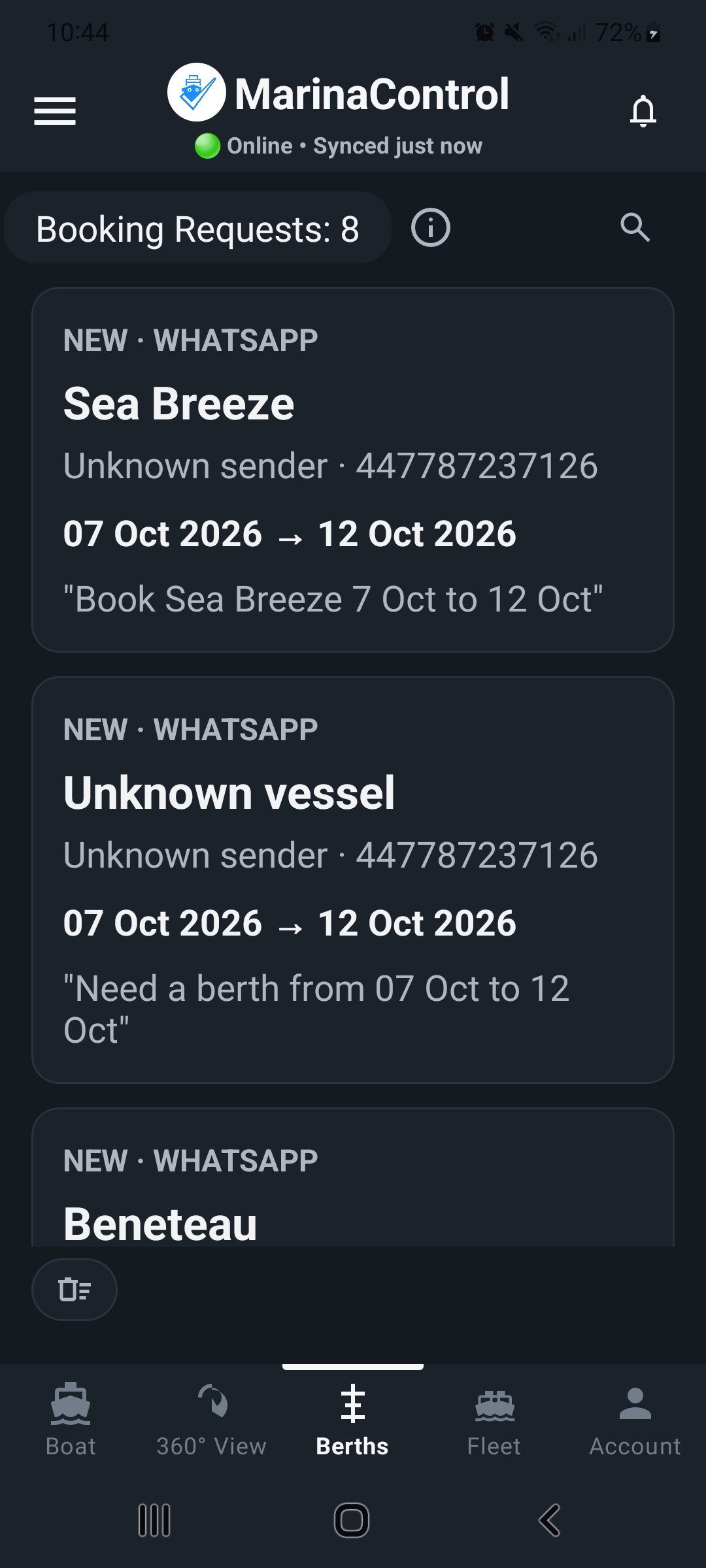
WhatsApp can remain the customer-facing communication channel while the operational information behind the enquiry is converted into a structured berth request.
From message to berth request
- Receive the enquiry. The customer starts the conversation through WhatsApp.
- Identify the customer and vessel. Capture the information already contained in the message.
- Complete the berth requirements. Obtain missing dimensions, dates, utilities or other information needed to assess the stay.
- Create a structured request. Move the relevant details out of the conversation and into an operational record.
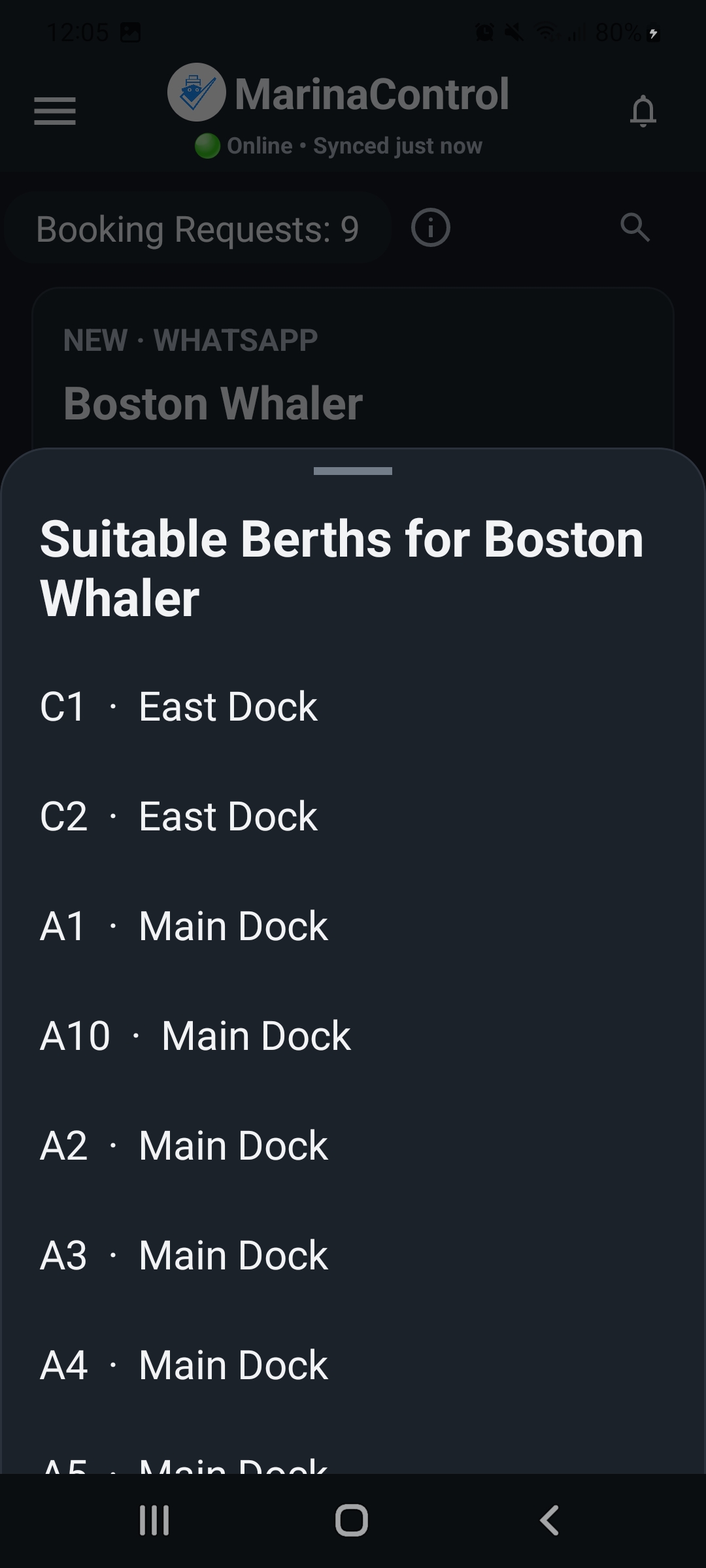
- Assess availability and suitability. The marina team can then make the berth decision using the information it needs.
- Keep the operational context. If the request progresses, the customer, vessel, stay and berth information can remain connected rather than being recreated later.
Why structured information matters
A berth is not allocated simply because a customer has asked for one. Vessel dimensions and requirements affect berth suitability. Arrival and departure dates affect availability. Contact and vessel information may be needed by different members of the marina team throughout the stay.
The objective is therefore not to replace conversational channels with another form. It is to prevent useful operational information from being trapped inside the conversation.
MARINACONTROL WORKFLOW
Message → structured berth request → berth → operational context
MarinaControl is designed to connect the enquiry with the operational journey that follows — including vessel and customer information, berth management and the marina team's wider operational view.
Request a MarinaControl demoThe wider principle
Digitalisation does not necessarily mean asking customers to abandon the communication channels they already use. A better operational approach can be to accept the enquiry where it begins, while ensuring the information required by the marina becomes structured, visible and actionable.
Operational note: The exact information required for a berth request varies by marina, vessel, jurisdiction and operating procedure. Marina teams should apply their own policies, safety requirements, contractual requirements and applicable legal obligations.